Grasshopper Medicine
A number of years ago, I moved into a new home that was still interwoven with deep nature. The land was alive and warm in a way I could feel immediately. Not long after I arrived, I began to notice the grasshoppers.
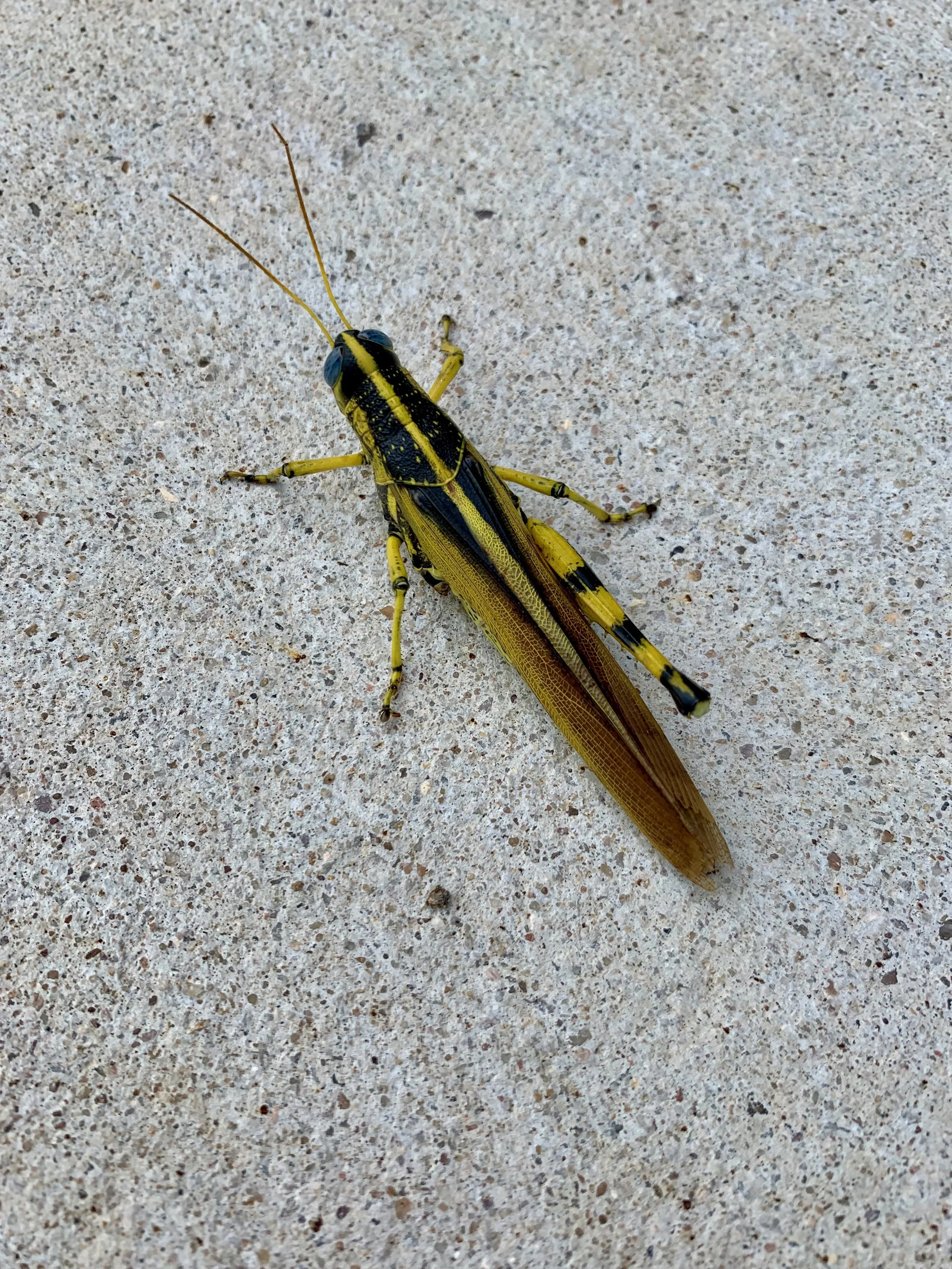
One of the many beautiful grasshoppers I’ve encountered
They were everywhere. Small brown ones and dark green ones hidden in the grass. Larger grasshoppers with brilliant colors—yellow, vivid green, flashes of red. One day, while walking down a trail, something extraordinary happened. As I stepped forward, dozens of grasshoppers flew onto the path at the same moment. They surrounded me, bouncing off my body, brushing against me with their legs. Some flew long distances, lifting fully into the air. Others moved in shorter arcs, more like hopping—staying close to the ground. I stood still, aware that I had stepped into a direct ancestral message.
Grasshopper Medicine, I realized in that moment, is not subtle.
Their teachings continued to unfold in many ways. Once, during a trance, I was shown their deeper meaning for me. I found myself walking out of a tunnel and into tall blades of grass. I was no longer in human form—I was the size of a grasshopper. I was surrounded by a vivid green, non-ordinary reality. A grasshopper appeared in front of me and guided me through the grass, leading me into an open space. From there, I could see them all—intermittently flying and then landing, jumping and then landing again. Watching them, I instinctively understood the message they were offering.
Grasshopper Medicine is about balance.
It teaches the importance of allowing myself to fly—to rise high, to feel free, to connect with spirit, nature, the Divine. And perhaps even more importantly, it teaches the return: coming back to the earth, back into the body, back into groundedness. Not choosing one over the other, but honoring the cycle between the two.
As this understanding deepened, I was reminded that this medicine is not only personal—it is ancient. In Aztec culture, the grasshopper carries a dual nature. It was seen as a symbol of both fertility and ruin: capable of bringing agricultural abundance, and also of devastating crops through locust swarms. In this way, the grasshopper embodied the unpredictable power of nature and the gods—creation and destruction held together.
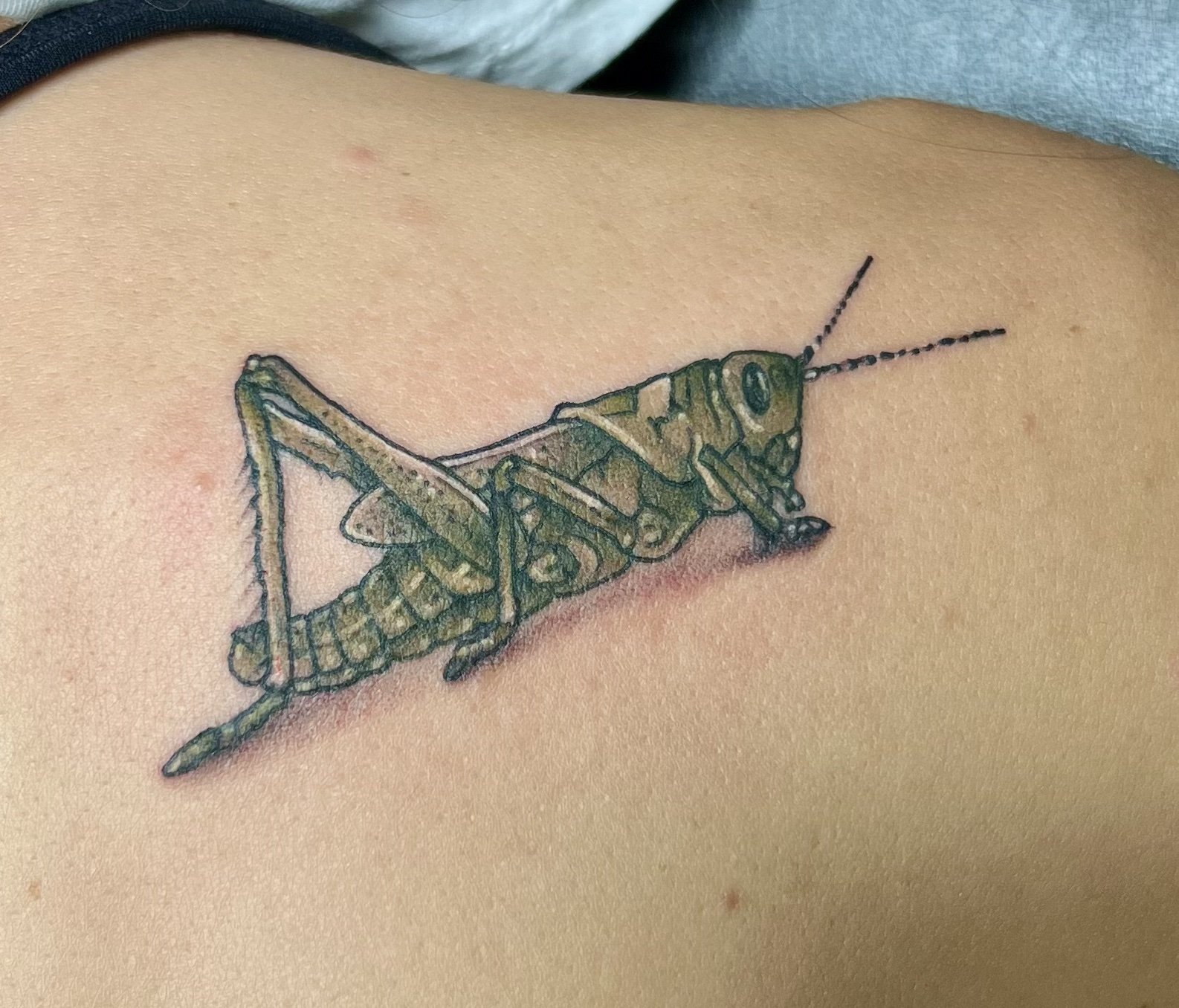
I have a lil grasshopper tattoo on my shoulder, a reminder of my ancestors’ constant presence.
Even sacred land carries its name. Chapultepec—Hill of the Grasshopper—was a place of abundance, water, and power, closely associated with Aztec nobility and spiritual significance. Remembering this, I felt my experiences placed within a much larger lineage of relationship between humans, land, and the messengers that move between worlds.
This understanding echoed through my waking life. Grasshoppers showed up when I was hesitating, when I was being asked to trust movement without certainty. They reminded me that there are many ways to move forward. Some leaps are long and bold. Others are small and close to the ground. All are guided by timing rather than fear.
Once, a grasshopper appeared on my doorstep. I felt its presence clearly, and I heard its message just as clearly: it was there to protect me, and it would stay until it passed. It did. When I returned home one day and found it dead, a deep mourning rose in me. I grieved its passing, and I also felt profound gratitude—for its life, for its protection, and for the medicine it gave. It had kept its word. And reminded me of the natural cycles of life, meaning, and death.
Since then, the grasshopper has been a sign that my ancestors are watching over me. When they appear, I know I am not alone. Sometimes they cross my path gently. Other times they arrive suddenly, flying directly into my awareness with a clear message—often about trust, opening the heart, and choosing freedom.
Grasshopper Medicine reminds me that spiritual guidance is not meant to pull us away from the world, nor to trap us within it. Like the grasshopper itself, it carries both ascent and return, abundance and humility, flight and landing. It asks us to live in relationship with this duality—to leap when the moment calls for it, and to land fully when it is time to touch the earth again.